Searching for Bees in Hellhole Canyon I started visited Anza-Borrego Desert State Park with my husband around three years ago. Ever since that first visit, we feel a pull to return to the Park in late November and again around February or March. I think about the sky in Anza-Borrego as a deliquescent expanse that… Continue reading Hesperapis in the Desert
Tag: pollinator
Triptych
Panel One: a male Valley Carpenter Bee (Xylocopa sonorina), collects nectar from Narrow Leaf milkweed (Asclepias fascicularis) blossoms. On the Sunrise Trail in Conejo Open Space, May 27, 2022. Panel Two: a Lorquin’s Admiral (Limenitis lorquini) collects nectar from Black Sage (Salvia mellifera) blossoms. On the Sunrise Trail in Conejo Open Space, May 27, 2022.… Continue reading Triptych
Crotch’s Bumble Bee
Prologue The first time I observed a Crotch’s Bumble Bee, Bombus crotchii (B. crotchii) was in June of 2019, during the first summer after the Woolsey Fire. Prior to that sighting, nature had already demonstrated its remarkable power: Higher than average rain in the desert and surrounding areas had spiked a spring wildflower super-bloom. An… Continue reading Crotch’s Bumble Bee
A Long-horned Bee: Subgenus Synhalonia
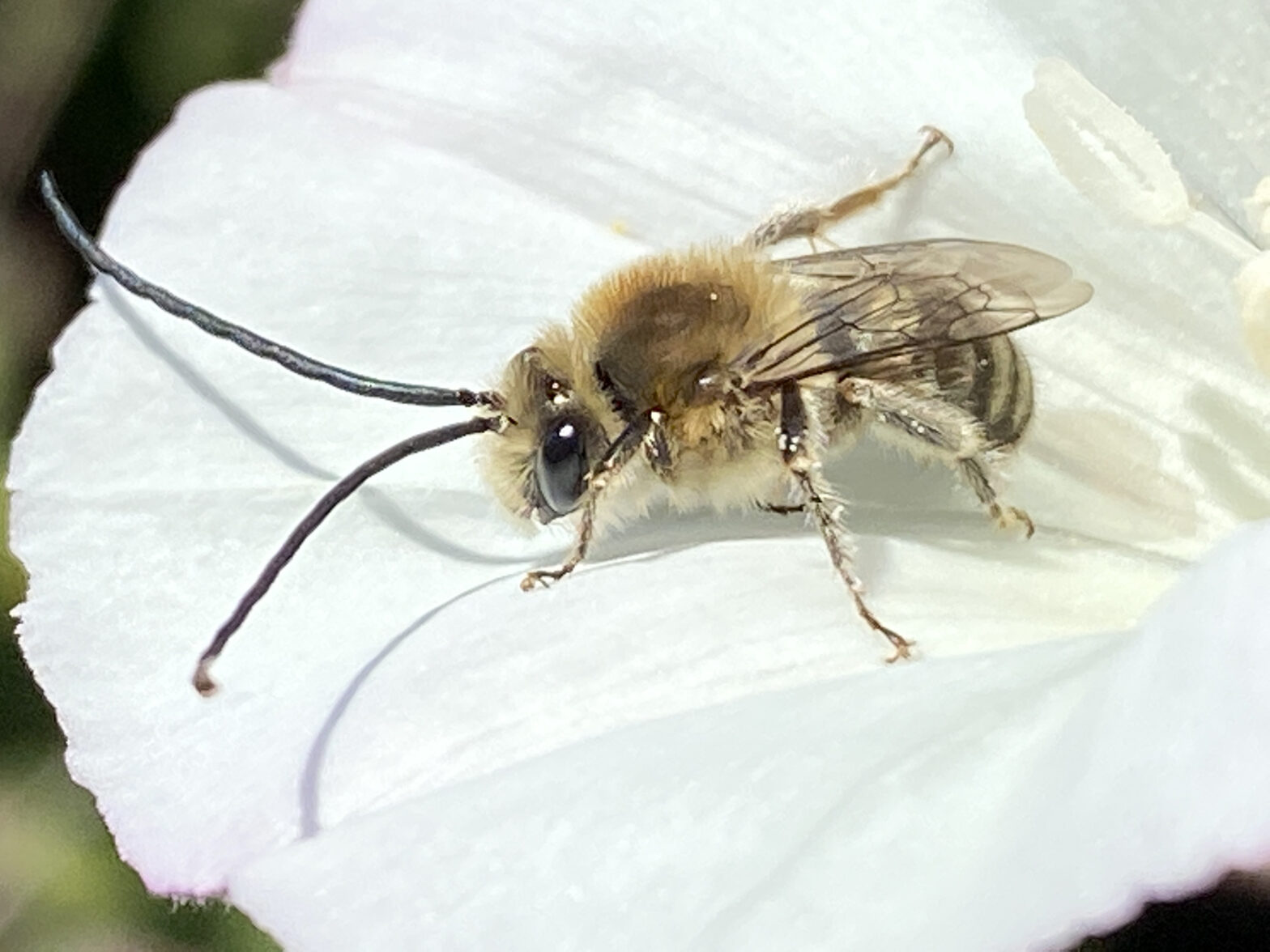
Long-horned bee species that are active in the spring to early summer are in the genus Eucera. Synhalonia is the only subgenus of Eucera present on the North American continent. Synhalonia comprises 55 species, with most of them occurring in the western states. The three bees featured here might be of the same species, but… Continue reading A Long-horned Bee: Subgenus Synhalonia